01
Name the work
Set the role, site, schedule, pay, and requirements before the role goes live.
Compare local shifts, review worker readiness, confirm completed hours, and carry each work record through pay closeout.
How work moves
The same job record carries the details workers need, the checks employers own, and the closeout information support and pay teams rely on.
Set the role, site, schedule, pay, and requirements before the role goes live.
Workers see the details and employers review readiness against the real shift.
The right people confirm the work before attendance or payout can move forward.
Approved hours, support context, and payout status stay tied to the original job.
01 · Worker discovery
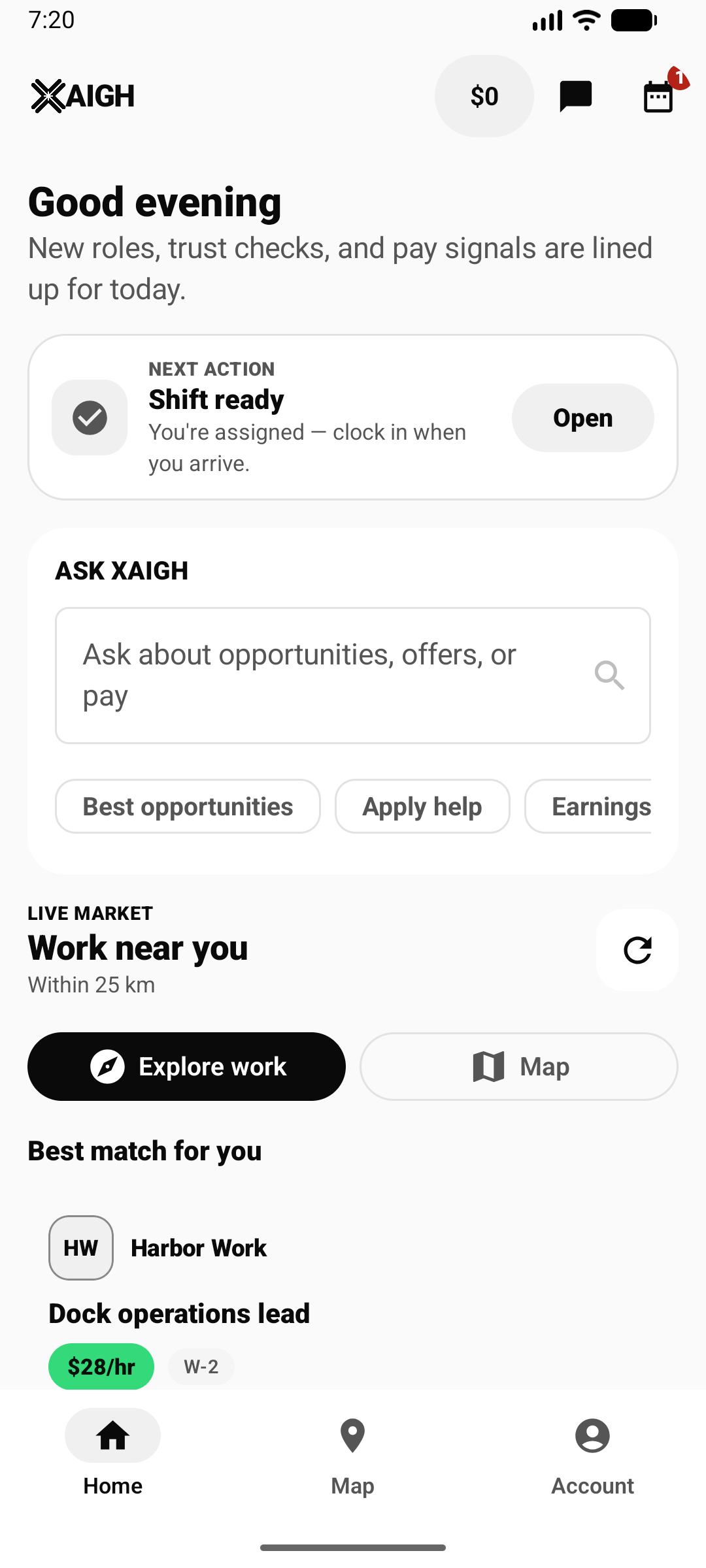
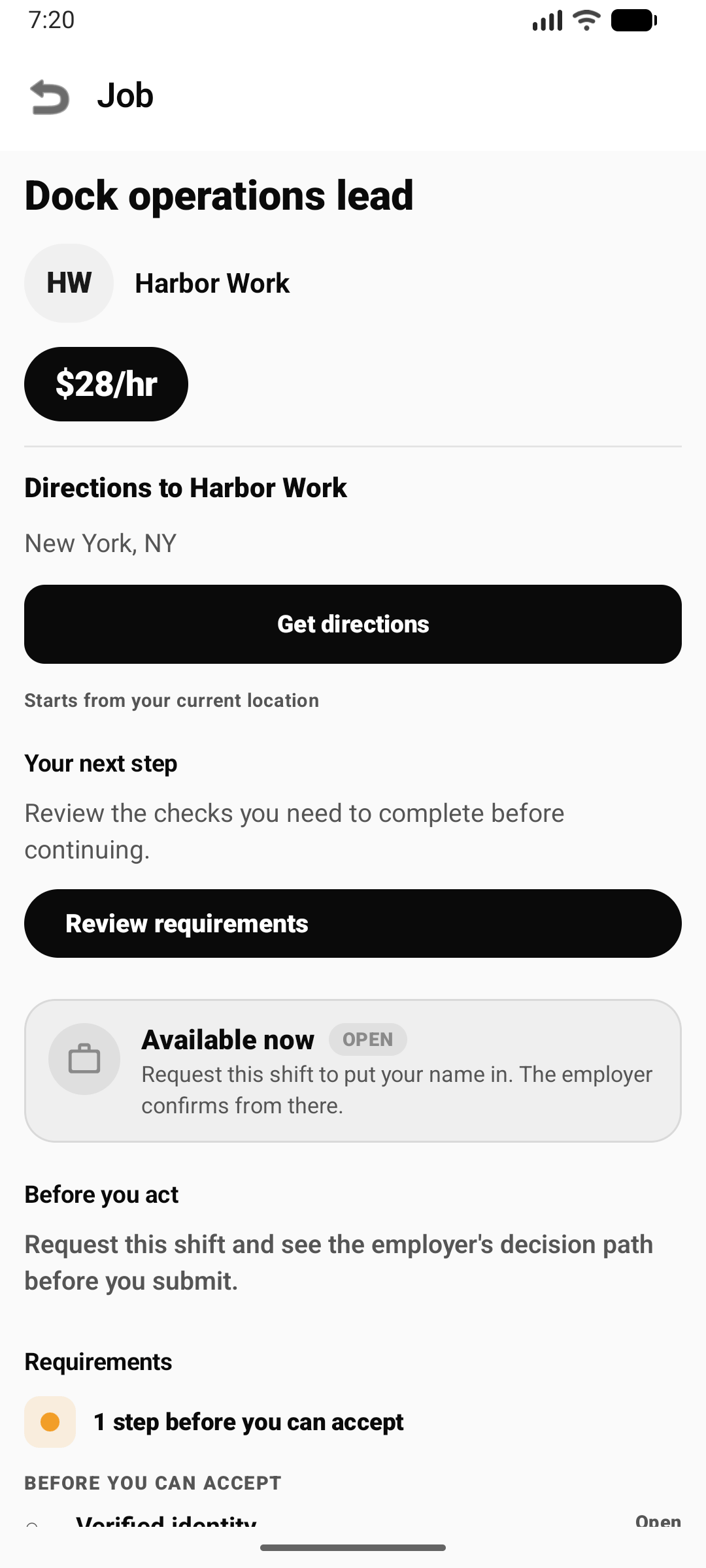
Workers can review nearby opportunities using schedule, commute, pay, and readiness details before choosing what to pursue.
See the shift window, role details, and requirements before deciding.
Review the worksite and commute details alongside nearby opportunities.
Check which profile, identity, or credential steps apply to a role.
Xaigh mirrors the employer posting, keeps local work rules, and closes stale jobs only when the client hiring feed proves they are gone.
Protected job fields
Source
Client hiring system
Stale check
24h watch
Apply mode
Redirect or forward
Review
Source details kept
Client system owns
Job details, open state, pay range, apply path
The employer system stays in charge of the posting. Xaigh will not overwrite it from the posting page.
Xaigh rules
Fill plan, matches, check-in, payroll handoff
Xaigh keeps the work rules in place: offers, site checks, documents, readiness, and worker audience.
Change trail
Created, changed, closed, and missing job events
Every change keeps provider, source file, status, and close rule details for review.
Client hiring system
Workday, Greenhouse, Lever, Ashby, iCIMS, or a custom feed sends the active roles.
One stable job record
Xaigh keeps title, pay, place, needs, apply link, job link, status, and requisition tied together.
Xaigh work layer
Matches, messages, fill, site checks, documents, worker audience, readiness, and payroll signals attach without rewriting the source job.
Missing from client feed
When the client feed no longer shows a role, Xaigh can close it locally and stop matching.
Live hiring status
Provider count, open and closed roles, stale feeds, and ownership rules feed the employer view.
Every role shows worker pay, the Xaigh fee, funding status, wage-floor check, no-show rule, and job close terms before launch.
Posting fee
$0
The Free plan includes one active job and the company’s first completed hire.
Charge timing
After completed shift
Employers are charged after verified work is done, not for opening a role.
Wage floor
Checked by market
Rates are checked against market and wage-floor rules before launch.
No-show
$0 charged
Employer charge for that worker is zero and the slot can reopen.
Price basis
Xaigh shows worker pay, service fee, and funding status before the employer can launch the role.
Launch state
Review first
No charge before approval
Worker pay
Worker pay
The worker rate is clear before Xaigh adds any service fee.
Rate shown first
Xaigh service fee
Service fee
The Xaigh fee is visible in the quote before the role can go live.
Shown before launch
Funding check
Funding check
Payment status is checked before posting, acceptance, and job close.
Required before work
Credit review
Credits
Credits are handled by Xaigh review, not employer math.
Xaigh approval only
No-show outcome
No-show outcome
If a worker no-shows, that charge stays at zero and the slot can reopen.
$0 worker charge
Ready to close
Fee
Shown before yes
Rate
Worker rate + Xaigh fee
The employer sees worker pay, Xaigh fee, and funding status before the role can go live.
Role review
Fee
Reviewed by Xaigh
Rate
Depends on the work
High-risk work, special checks, or unusual labor terms stay in review before price is shown.
Payroll
Fee
Payroll checked
Rate
Floor checked first
Work tied to payroll, wage floors, or worker class gets a checked quote before launch.
Money stays behind completed work.
The price can guide review, but charges and payouts stay behind approved work.
Payment policy stays simple: charge after completed work, check payment status before posting or acceptance, and charge $0 for a no-show worker.
02 · Employer review
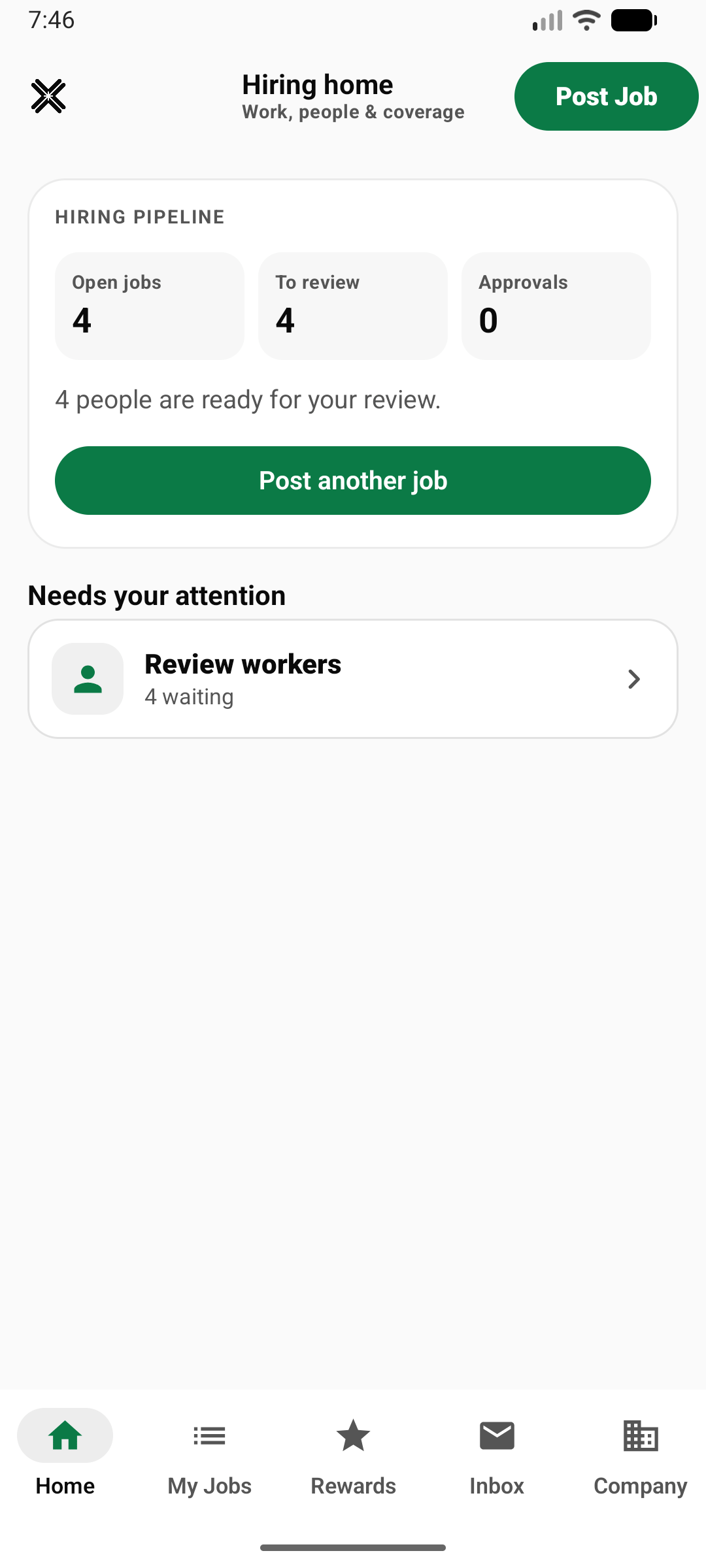
Hiring Home brings open roles, worker review, and approvals into the same employer workflow.
See which jobs are active in the hiring flow.
Keep candidate review visible from the employer home.
Surface approval work as its own next action.
03 · Pricing and pay
Xaigh keeps matching, funding status, completed-work billing, payroll handling, and payout handoff tied to the same operating record.
Eligible 1099 workers start payout as soon as verified work closes. Career and W2 roles use payroll; a linked payout method and processor timing still apply.
Payroll, tax forms, and compliance records stay tied to approved completed work instead of side payments.
One weekly invoice record keeps job, approval, and payout context ready for finance review.
Rates stay tied to role, market, shift urgency, commute pressure, and employer budget checks.
04 · Employer operations
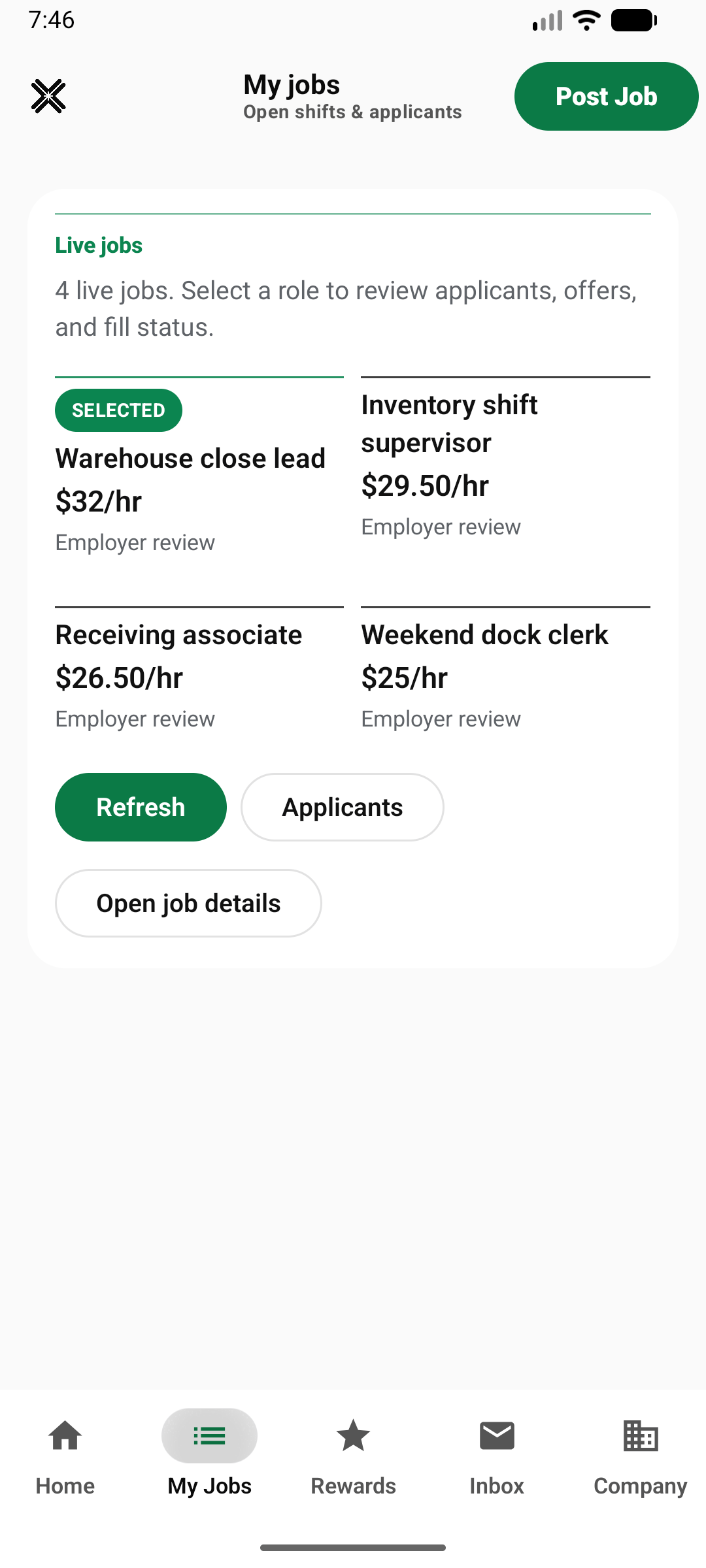
Bring role details, worker readiness, site requirements, and outstanding reviews into the employer hiring flow.
Open hiring view05 · Trust and access
Identity, credentials, and document access follow explicit owner and review boundaries as work moves forward.
Every part of Xaigh is designed to keep work clear, funded, staffed, and reviewable as you scale.
Schedule rollout review